
Mexico City Congress Holds Children’s Parliament 2026: Young Voices Shape the Future
Mexico City, January 30, 2026 – The Mexico City Congress today hosted the Children’s Parliament 2026, an initiative that brought together 66 children and adolescents, aged between six and 14, from both public and private educational institutions. The young participants presented a range of proposals aimed at fostering a better and safer metropolis, alongside other pertinent issues affecting their environment.
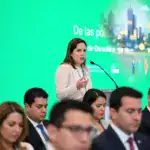
The event was inaugurated by Deputy Laura Alejandra Álvarez Soto (PAN), who presides over the Commission for the Attention to the Development of Children. Addressing the young parliamentarians, Álvarez Soto expressed her hope that they would have a rewarding experience within the legislative precinct of Donceles.
“We want this to motivate you to stay close to the politics of the city and the country. Nothing would give me more pleasure than to see some of you become deputies in a few years,” stated the legislator, highlighting the importance of youth engagement in civic life.
Álvarez Soto further elaborated that her commission received hundreds of applications, underscoring the significant interest of this demographic in participating, expressing opinions, and becoming involved in issues that impact their daily lives. She urged the children to articulate their ideas for creating a better city, emphasizing that “Democracy is learned by exercising it, and today you have the opportunity to do so in a place that houses the public life of Mexico City.”
Andrés Atayde Rubiolo (PAN), President of the Political Coordination Board (JUCOPO), also addressed the young parliamentarians. He stressed the importance of imagination, stating, “Your job is to dream and imagine the city that all of you deserve.” Atayde Rubiolo affirmed that this parliament is not merely a symbolic event but a genuine exercise in democracy and civic formation. He underscored that democracy is built from childhood, primarily by listening to those who hold different perspectives.
Deputy Iliana Ivón Sánchez Chávez (MORENA), Vice President of the aforementioned Commission, echoed these sentiments, asserting that children’s ideas are invaluable and essential for strengthening their participation and presence in parliamentary spaces. This, she noted, is crucial for building a more just, inclusive, and responsive city that addresses their needs.
Congressman Miguel Ángel Macedo Escartín (MORENA) encouraged the children to continue voicing their concerns and advocating for their rights. “I see with joy that the great participation you have will be reflected in the very near future,” he remarked, acknowledging their potential impact.
Luciano Concheiro Bórquez, head of the Federal Educational Authority in Mexico City, elucidated the primary objective of the children’s parliament: to educate children on the functioning of the country’s legislative system. He emphasized the critical need to listen to their perspectives in the ongoing profound transformation aimed at constructing a more inclusive, democratic, and just city. Concheiro Bórquez highlighted that education should be humanistic, community-oriented, and participatory, thereby dispelling the outdated notion that individuals must reach adulthood to make valuable contributions to society.
The parliament saw the participation of 33 girls and 33 boys, who developed their ideas across four key thematic areas:
- Planning and Improvement of Public Space: This included discussions on streets, parks, schools, and public safety.
- Child Participation in Public Policies: Topics covered mobility, protection of sentient beings, healthy and addiction-free living, and respect for children’s emotional health.
- Social Networks and Children’s Safety Online: This section addressed digital dangers and bullying.
- Indigenous Peoples, Neighborhoods, and Communities: Proposals here focused on public services, the environment, access to water, migrant children, children’s councils, street children, inclusion in reading, and foster homes.
From the diverse ideas presented in the tribune, the children collectively selected those that will be formally received by the Commission for the Attention to the Development of Children. These selected proposals are slated for transformation into legislative instruments, demonstrating a tangible pathway for their ideas to influence policy.
The Children’s Parliament 2026 underscores the Mexico City Congress’s commitment to fostering civic engagement and empowering the younger generation to actively participate in shaping their urban environment and future.