Mexico City Weather Forecast: Rain Expected on March 5, 2026
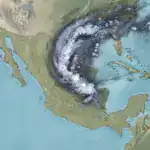
Mexico City, March 5 – Residents of Mexico City are advised to be prepared for significant rainfall today, Thursday, March 5, 2026. The meteorological forecast indicates a high probability of precipitation throughout the day, alongside moderate temperatures and strong winds.
According to the latest report, the maximum temperature for Mexico City is expected to reach 24 degrees Celsius, while the minimum temperature will drop to 10 degrees Celsius. The probability of rain for the day is 73%, decreasing to 25% during the night. Cloud cover is anticipated to be around 34% during the day and 23% at night.
Wind gusts are projected to reach up to 43 kilometers per hour during the day, subsiding to 30 kilometers per hour at night. Furthermore, residents should take precautions against the sun, as ultraviolet (UV) radiation levels are expected to reach a high of 10.
Climate in Mexico City: A Diverse Landscape
Despite its geographical location, Mexico City exhibits a diverse range of climates, from temperate to cold humid, and even alpine tundra in its higher southern regions. Generally, the city experiences a warm and temperate climate, with temperatures typically ranging between 22 and 27 degrees Celsius. Summers are characterized by abundant rainfall, with June, August, and September being the wettest months.
During winter, temperatures can drop to zero degrees Celsius in elevated areas such as Ajusco. Conversely, boroughs like Iztacalco, Iztapalapa, Venustiano Carranza, and Gustavo A. Madero tend to be drier and more temperate.
Historical Weather Records and Climate Change Impacts
Historical records show that the last snowfall in Mexico City occurred in 1967. The highest recorded temperature was 33.9 degrees Celsius on May 9, 1998, while the lowest was -10 degrees Celsius on December 10, 1972.
Climate change has significantly impacted the capital, leading to frequent environmental contingencies. In response, the Secretariat of Environment (Sedema), in collaboration with the German Agency for Sustainable Development (GIZ Mexico) and the Mexican Climate Initiative (ICM), is implementing various strategies focused on integrated and sustainable mobility, solar city initiatives, zero waste, sustainable water management, river restoration, urban and rural revegetation, air quality improvement, and climate education.
Mexico’s Megadiverse Climate
Mexico’s unique geographical position, bordered by the Caribbean Sea and the Pacific Ocean and bisected by the Tropic of Cancer, contributes to its status as a megadiverse country. It hosts at least 12% of the world’s species, with 12,000 of them being endemic.
Although the Tropic of Cancer divides the country into temperate and tropical climatic zones, altitude, latitude, and land-water distribution result in seven distinct climate types across the nation: warm sub-humid, dry, semi-dry, desert dry, warm humid, temperate sub-humid, temperate humid, and cold.
This climatic diversity allows for extreme temperature variations. For instance, temperatures can plummet to -30 degrees Celsius in the high altitudes of Chihuahua, while soaring to 50 degrees Celsius in the Mexicali desert in the north. The National Meteorological Service reports an average annual temperature of 19 degrees Celsius for the country, though cities like Mexicali, Culiacán, Ciudad Juárez, Hermosillo, Torreón, Saltillo, and Monterrey experience exceptionally high temperatures.
San Luis Río Colorado in Sonora holds the record for the highest temperature ever recorded in Mexico, reaching 58.5 degrees Celsius on July 6, 1966. Conversely, the lowest temperature on record was -25 degrees Celsius in Madero, Chihuahua, on December 27, 1997.
However, these diverse climates are increasingly affected by global warming. Experts predict a challenging future for Mexico, with a significant reduction in annual rainfall and a substantial increase in temperatures. The consequences are already evident, impacting farmers and ranchers through droughts and severe floods. During hot seasons, major cities like Mexico City have witnessed a rise in environmental emergencies.
Source: https://www.infobae.com/mexico/2026/03/05/clima-en-ciudad-de-mexico-temperatura-y-probabilidad-de-lluvia-para-este-5-de-marzo/