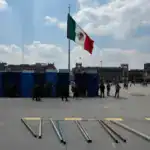

The air in Mexico City often hums with a thousand stories, but some narratives are etched not just in words, but in stone and public spaces. Such is the case with the ‘Glorieta de las Mujeres que Luchan’ – The Roundabout of Fighting Women – a site that has been profoundly re-signified by the resilience of countless women. It stands as a testament to those who share the agonizing loss of disappeared family members or have been victims of femicide, becoming a stage for a struggle that, tragically, seems interminable.
From Colonial Past to Feminist Future
For over 144 years, the roundabout on Paseo de la Reforma proudly displayed a monument honoring the Genoese navigator Christopher Columbus. However, a wave of protests against this figure, accused of initiating a genocide against indigenous peoples, led the Mexico City government to remove the statue in 2021. With its removal, the space was quickly claimed by various collectives seeking to re-appropriate the roundabout. Their goal was to transform it into a place where their struggles could be expressed without fear of repression, and where they could connect with others facing similar hardships.
This act of re-appropriation gave birth to the ‘Frente Amplio de Mujeres que Luchan’ (Broad Front of Fighting Women), which subsequently christened the space with its current name. The Roundabout of Fighting Women rapidly evolved into a crucial meeting point for activist and feminist collectives. Day after day, these groups gather here, tirelessly seeking justice for their disappeared relatives and the hundreds of women who have fallen victim to sexual violence and femicides.
A Statue of Defiance: The Antimonumenta
Beyond its new name, the roundabout now features a powerful statue: a woman with her left fist raised. This ‘Antimonumenta’ serves as a potent symbol of the collective struggle of all members of the feminist and searching mothers’ collectives. It is a recognition of their unwavering resistance in their fight for justice. Surrounding this defiant figure are hundreds of names of women who have been victims of violence, abuse, and femicide, alongside social fighters who have died or been murdered in their pursuit of justice.
The transformation of this public space is more than just a change of name or the erection of a new statue. It represents a profound shift in narrative, a reclaiming of history, and a powerful assertion of presence by those who have long been marginalized. It is a place where grief is transformed into collective strength, and where the memory of those lost fuels the fight for a better future.
As the city moves forward, the Roundabout of Fighting Women stands as a constant, poignant reminder of the battles fought and the justice still sought. It is a beacon of hope and a testament to the enduring power of collective action in the face of adversity.
Source: https://oem.com.mx/elsoldemexico/metropoli/la-glorieta-de-las-mujeres-que-luchan-en-cdmx-como-un-grupo-de-madres-la-rebautizaron-28799333