The Vanished: A Family’s Desperate Search
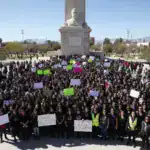
On March 8, 2026, during the International Women’s Day march in Ciudad Juárez, a poignant cry for help echoed through the streets. The families of Fátima Fonseca, Jeremis Ubaldo Castillo, and Bertha Alicia, all residents of Ciudad Juárez, demanded an expedited search and clarification regarding their disappearance in Celaya, Guanajuato. More than a month has passed since they vanished, leaving their loved ones in agonizing uncertainty.
The three individuals – 31-year-old Fátima Fonseca, her husband 28-year-old Jeremis Ubaldo Castillo, and 15-year-old Bertha Alicia, Fátima’s cousin – were last seen on January 25, 2026, in Celaya. Their disappearance has been overshadowed by a brutal massacre of eleven football players in Salamanca on the same day, a tragic event that, according to family members, diverted critical attention and resources from their case.
A Routine Visit Turns into a Nightmare
Fátima, Jeremis, and Bertha Alicia had traveled to Guanajuato to visit their grandmother. On the evening of January 25, they left their young daughter with the grandparents, intending to go out for dinner. However, they never reached their destination, nor did they return home. “They arrived with the grandparents, saw them, chatted, and left their youngest daughter. Then they went out to dinner at a club they never entered, and they also didn’t return home; they disappeared when they parked,” recounted Jeremis’s aunt, who joined the march in Juárez.
The family’s anguish is compounded by the lack of progress in the investigation. Authorities reportedly located the vehicle the victims were believed to have been traveling in, but no further information regarding their whereabouts has been provided. The family claims that the Guanajuato State Prosecutor’s Office informed them that their focus was primarily on the Salamanca massacre, which occurred simultaneously. This alleged prioritization has left the Juárez families feeling neglected and desperate for answers.
The Shadow of Violence: Guanajuato’s Deadly Grip
Guanajuato has been plagued by a surge in violence, with Celaya and Salamanca being particularly affected. The state’s grim reality of cartel conflicts and homicides often results in widespread disappearances. The case of Fátima, Jeremis, and Bertha Alicia is a stark reminder of the human cost of this escalating crisis and the systemic challenges faced by families seeking justice.
During the 8M march, family members carried banners and chanted slogans, urging authorities to intensify their efforts. “In Chihuahua, there are more than 4,600 absences; these are not numbers, they are stolen lives; we demand real and immediate searches,” they declared, underscoring the broader issue of disappearances in the region.
Unanswered Questions and a Call for Accountability
The families’ pleas highlight critical questions about the allocation of resources and the efficiency of investigations into disappearances, especially when high-profile violent events occur concurrently. Is the justice system equipped to handle multiple crises simultaneously? Are all victims receiving equal attention, regardless of the circumstances of their disappearance?
The case of the three missing juarenses underscores the urgent need for transparent and equitable investigative processes. As days turn into weeks and weeks into months, the families’ hope dwindles, replaced by a growing fear that their loved ones will become another statistic in Mexico’s tragic narrative of the disappeared.
The families vow to continue their fight, refusing to let the case of Fátima, Jeremis, and Bertha Alicia fade into obscurity. Their unwavering determination serves as a powerful testament to the enduring human spirit in the face of unimaginable loss and systemic indifference.
Source: link-zrodlowy.pl