
Mexico City Congress Holds Second Deliberative Session on Care System for Seniors
Mexico City, April 10 – In a significant step towards establishing a comprehensive Care System for Mexico City, the local Congress held its second deliberative working session on April 9, 2026. This session focused explicitly on the needs and proposals of “Senior Citizens,” who voiced their concerns regarding medical care, mobility, and urban infrastructure, among other critical areas.
The event, organized by the United Commissions on Inclusion, Social Welfare and Enforceability of Social Rights, and Gender Equality, aimed to gather insights into the challenges faced by this demographic. The information collected will be instrumental in refining the preliminary draft of the Care System Law.
Legislators Emphasize Senior Citizens’ Rights and Welfare
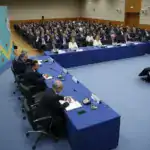
Held in the “Nelson Mandela” Room of the capital’s Congress, the session saw legislators from both commissions underscore the importance of addressing the needs of older adults. Discussions included the protection of their human rights and the recognition of their invaluable professional and educational experiences.
The session was led by Deputy Víctor Gabriel Varela López and Deputy Cecilia Vadillo Obregón, presidents of the aforementioned commissions, respectively. They were joined by Deputy Lizzette Salgado Viramontes of the PAN party and Deputy Royfid Torres González of the MC party.
Deputy Varela highlighted that the preliminary draft of the law has been developed through a consensus among all political forces represented in the local Congress, relevant capital government agencies, and social stakeholders involved with senior citizens. He also emphasized a fundamental aspect of the draft: ensuring that the budget allocated to the Care System will be progressive, aiming to strengthen services and programs that promote the well-being of the population.
Defining the Care System: Principles and Shared Responsibility
Deputy Vadillo outlined the two main objectives of this legislative instrument: to establish the content of the Care System and to define its governance. She stressed that the theoretical framework must be guided by principles, concrete actions, and public policies that each capital government institution should implement to create this system. Examples include “Utopías,” “Casas de las Tres R,” and “Care Centers.”
Furthermore, Vadillo noted that the law establishes three fundamental rights: the right to care, the right to be cared for, and the right to self-care. It also defines shared responsibility principles among families, governmental authorities, and the private sector.
Deputy Salgado emphasized that this process seeks to incorporate critiques and contributions to strengthen the law’s content and ensure it genuinely addresses the population’s needs. She acknowledged that crafting legislation on care presents a challenge for the local Congress, as it involves recognizing historically invisible rights.
Deputy Torres affirmed that understanding the daily needs and realities of all priority groups must be reflected in the law. While recognizing the significant elements already present in the preliminary draft, he stressed that important observations still need to be incorporated to achieve a comprehensive care law.
Key Questions and Future Needs
During the deliberative session, attendees were asked five key questions to ascertain their short, medium, and long-term perspectives:
- Do you believe the principles of this instrument encompass what your population needs?
- Do you believe the rights of caregivers and those being cared for, as established in the instrument, encompass what your population needs?
- Do you believe the definition, objective, and mode of operation established in the instrument encompass what your population needs?
- What is your opinion on the model of care centers and services established in the instrument?
- Do you believe this instrument encompasses what your population needs?
Throughout these five blocks, senior citizens articulated their current and future care needs, including specialized gerontological attention, access to public services at appropriate times, recognition of their work experience, labor inclusion, and the adaptation of public spaces and transportation, among other crucial areas.
The insights gathered from this session will be crucial in shaping a robust and inclusive Care System Law for Mexico City, ensuring that the needs of its senior citizens are adequately met.
Source: https://www.congresocdmx.gob.mx/comsoc-realizan-segunda-mesa-deliberativa-sobre-sistema-cuidados-cdmx-7323-1.html