
Mexico City, June 8 – The transformation of the historic Ramón López Velarde Poet’s House into the new ‘Casa de las Palabras,’ which will also house Mexico City’s first public cabaret, has ignited a strong reaction among writers, poets, and members of the cultural community. Many are calling the decision an affront to the country’s literary memory.
Former Museum Becomes ‘Casa de las Palabras’
The venue, located in the Roma neighborhood, where Zacatecan poet Ramón López Velarde lived his final years and died in 1921, ceased to function as a museum and center exclusively dedicated to poetry after more than three decades of cultural activities. It will now be managed by the Mexico City Secretariat of Culture, which is promoting a new purpose for the space.
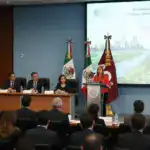
The new phase of the property was officially presented by the capital’s Secretary of Culture, Ana Francis López Bayghen. She explained that the venue aims to become a laboratory for narratives, literary creation, and community cultural action. According to authorities, the project will expand its activities to include expressions related to written, oral, visual, and performing arts. Announced plans include the installation of cultural organization offices, a bookstore, and the first public cabaret in Mexico City.
The capital agency maintains that the intention is to open the space to new forms of creation and cultural representation, also incorporating indigenous literature, Afro-Mexican literature, and proposals linked to linguistic and artistic diversity.
Literary Community Accuses Loss of a Cultural Symbol
However, the announcement generated a wave of criticism among writers and cultural promoters, who believe that the change eliminates a fundamental reference point for Mexican poetry.
Various voices pointed out that the disappearance of the Ramón López Velarde House Museum represents a loss for the country’s cultural memory. Some authors described the measure as an act of cultural authoritarianism and questioned why a venue dedicated for decades to the preservation of the poet’s work would radically change its purpose.
Writer Myriam Moscona, a member of the venue’s first board of trustees, publicly expressed her sadness over the decision and voiced concern about the fate of the historical and photographic collection housed there.
Other authors such as Ernesto Lumbreras, Tedi López Mills, Sergio Téllez-Pon, Blanca Luz Pulido, and Malva Flores also expressed their rejection of the project, arguing that the measure weakens one of the most important spaces for the dissemination of poetry in Mexico.
The Legacy of the Ramón López Velarde Poet’s House
The Ramón López Velarde Poet’s House was inaugurated in the early 1990s with the aim of preserving the memory of the author of ‘La Suave Patria.’ In addition to functioning as a site museum, the venue housed specialized libraries, seminars, workshops, editorial presentations, and literary gatherings.
For more than 33 years, it established itself as one of the main spaces dedicated to Mexican poetry and the study of national literature. For this reason, the decision to convert it into the ‘Casa de las Palabras’ and add a public cabaret project has opened a debate about the future of historic cultural spaces and how public institutions should balance cultural innovation with the preservation of literary heritage.
Mexico City’s First Public Cabaret Project
According to the capital’s Secretariat of Culture, the new space seeks to integrate different artistic expressions linked to words and performing arts. Within this vision, the creation of Mexico City’s first public cabaret is contemplated, an initiative that aims to bring this theatrical genre to new audiences and make it a permanent cultural offering.
Nevertheless, for a significant part of the literary community, the debate does not revolve solely around the cabaret, but around the disappearance of an emblematic venue dedicated to the figure of Ramón López Velarde, considered one of the most important poets in Mexican literature.