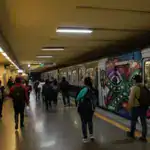
Despite assurances from Metro director Adrián Rubalcava that Line 2 would be fully operational by Thursday, June 11, the day the 2026 World Cup commenced, several key stations remained closed. Hidalgo, Bellas Artes, Zócalo, Pino Suárez, Allende, and Chabacano stations on Metro Line 2 were affected, causing significant disruption for commuters.
Motorcyclists Step in to Fill Transportation Gap
Capitalizing on the sudden transportation vacuum and the influx of fans heading to the Estadio Ciudad de México in the south, motorcyclists began offering rides. Reports from social media indicate that these impromptu services were charging 120 pesos for trips from Metro Revolución to Allende.
Videos circulating online show individuals shouting ‘Motorcycle service!’ and ‘Where are you going?’ as they sought passengers, highlighting the immediate impact of the Metro closures on daily commutes and World Cup travel plans.
Getting to Estadio Ciudad de México: Public Transport is Key
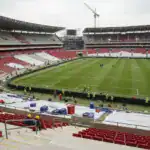
For those planning to attend matches at the Estadio Ciudad de México, car travel is not an option due to the lack of parking facilities. Public transportation remains the primary means of reaching the stadium. The Secretariat of Mobility of Mexico City (SEMOVI) has also announced partial and total road closures around the stadium area.
Total Road Closures (Pedestrian Only):
- San Gabriel – Santa Úrsula
- San Benjamín – Santa Úrsula
- San Cástulo – Santa Úrsula
- San Celso – Santa Úrsula
- San León – Santa Úrsula
- Santo Tomás – San Alejandro
- Santo Tomás – San Jorge
To mitigate the impact of these closures and facilitate access for World Cup attendees, Mexico City has implemented a dedicated transportation system. Buses will transport fans to Santa Úrsula, Santo Tomás, and Huipulco. Departure points for these services include:
- Bellas Artes
- CETRAM Chapultepec
- Ángel de la Independencia
- Palacio de los Deportes
- Estadio Olímpico Universitario
- Parque México (CETRAM Huipulco)
- San Jerónimo (CETRAM Huipulco)
Additionally, seven semi-pedestrian routes have been established for those who prefer to explore the city on foot:
- Santa Úrsula
- Parque Cantera
- Av. Estadio Azteca
- Renato Leduc y Anillo Periférico
- Periférico y Calz. de Tlalpan
- Paseo Acoxpa
The unexpected Metro closures underscore the logistical challenges of hosting a major international event like the World Cup and highlight the adaptability of informal transportation networks in Mexico City.
Source: elfinanciero.com.mx