
In August 2026, looking ahead, NON.agency expects 2027 to be a big turning point for tourism marketing. The focus will be on very personal messages, smart automation, and real, sustainable experiences. Change is coming either way-the real question is how much it will change travel marketing. Our view for 2027 is simple: travel brands will stop just reacting to trends and start building journeys that feel personal and useful, using advanced tech to connect with people in a more human way, while also supporting responsible tourism.
Travel usually changes slowly because planes, hotels, and systems last a long time, and many companies still use older tools. But the industry has reached a moment where big economic, social, and tech changes are pushing it forward fast, as shown in Deloitte’s “Future of Consumer” forecasts. The shifts we saw over the last 20 years-who travels, where they stay, and how they book-may look small compared with what’s expected over the next decade. Brands that stay flexible and keep trying new ideas will do well, turning pressure into growth and stronger customer loyalty.
How Does NON.agency Predict the Future of Tourism Marketing?
At NON.agency, our 2027 predictions are not guesses. They come from ongoing research, data, and regular market checks. To forecast well, you need more than today’s trends-you need to study what is driving people’s choices and what technology is making possible.
What Data and Insights Are Used for 2027 Projections?
Our 2027 outlook is based on many data sources and analysis methods. We track global economic signals, changes in consumer spending (such as Deloitte’s ConsumerSignals dashboard), and demographic shifts. We also review market research from sources like Statista and eMarketer, which share key numbers on digital travel sales and ad spending. For example, the online travel market is expected to reach close to $680 billion worldwide in 2025, continuing a steady rise. This supports the idea that digital channels will stay central.
We also follow travel-specific plans and reports, like UN Tourism’s Road Map to Sustainable and Resilient Tourism, which counts down to the International Year in 2027. Led by Secretary-General Shaikha Al Nuwais, it points to a shift from discussion to real action, especially in Europe, with a strong focus on climate-ready practices.
Regional plans, such as Croatia’s tourism marketing roadmap to 2027, also help show how destinations are setting goals around sustainability and brand positioning. We combine big-picture and local data with live signals like search trends, social sentiment, and booking patterns to build a full and current view of what’s happening — including how often destinations and operators get named in AI-generated answers, a visibility layer we break down here: https://non.agency/en/blog/generative-engine-optimization-geo-a-complete-guide-to-ai-visibility/
NON.agency’s Vision: What Will Distinguish Leading Brands in 2027?
In 2027, the strongest tourism brands will stand out by mixing data-led personalization with real, memorable experiences. It won’t be enough to sell a “nice destination.” Winning brands will shape trips that match each traveler’s needs and values. That means moving from broad marketing to very focused communication, using AI and forecasting tools to reach people at the right time, with the right message, on the right platform.
Speed and flexibility will be required. Travel keeps shifting because of new tech, changing tastes, and outside events. Brands that can act fast and keep improving-especially by fixing old systems and capturing high-quality data-will build a real advantage. Clear honesty about sustainability, backed by proof and measurable results, will also be a key sign of leading brands, since more travelers now care about impact.
What Shifts Are Shaping Tourism Marketing in 2027?
Tourism marketing in 2027 is being shaped by changes in traveler habits, global conditions, and fast-moving technology. These shifts push marketers to move past old playbooks and use a more flexible and responsive way of working.
What Traveler Behaviors Are Changing Most Rapidly?
Traveler behavior is changing quickly, especially with younger groups. Millennials and Gen Z are drawn to personal trips, social discovery, and experiences, often valuing memorable moments more than buying things. Wealthy travelers are also pushing demand for premium travel. Airlines like Delta expect premium tickets to make up most of their revenue by 2027, and large hotel brands are adding more luxury options.
At the same time, travelers want clear proof and real stories, especially around sustainability. People no longer accept unclear “green” claims. They want brands to show measurable results and make eco-friendly choices part of the main plan. Remote work is also creating a fresh travel market. With over 40 million Americans working remotely, many trips are longer and mix leisure with working hours, helping grow digital nomad life and blending travel with normal routines.
How Are Global Events and Trends Impacting Tourism Marketing?
Global events and wider trends still shape tourism marketing strongly. Interest in travel after COVID-19 has stayed high, with international air travel expected to reach 5.2 billion passengers in 2025, up 6.7% year over year. Even with inflation and economic uncertainty causing some people to spend less, the desire to travel remains strong. International tourism is expected to return close to pre-pandemic levels by 2027, although uncertainty may still reduce demand for paid accommodation in some places.
Sustainability is a major driver. UN Tourism’s Road Map to Sustainable and Resilient Tourism, leading into the International Year in 2027, shows a clear global push for greener travel. With strong attention on Europe, it supports a move from talk to real action and helps guide tourism groups into climate-ready ways of working. Marketers will need to treat sustainability as a core part of the brand, not an extra. That includes handling overtourism and promoting responsible travel choices.
Which Technologies Are Driving Transformation in the Sector?
Technology is the main force changing tourism marketing. AI-based personalization and forecasting tools are now standard, not “future ideas.” They help brands build focused campaigns, automate customer support, and improve revenue by reading large datasets, spotting customer groups, and predicting demand changes.
New types of search-voice, visual, and AI-based search-are changing how people find and plan trips. Tools like Google Lens and Pinterest support image search, and assistants like Alexa and Siri support spoken questions. Google’s generative AI already suggests destinations and helps plan itineraries, making research feel more natural and personal. Travel media networks are also growing fast. Airlines, hotels, and OTAs can use their own platforms and first-party data to run targeted ads, with less reliance on third-party tracking. The metaverse and virtual experiences are also growing as a way to show destinations through immersive previews and build interest before someone travels.
How Will Evolving Traveler Demographics Influence Marketing Tactics?
To market well in 2027, brands need to understand different traveler groups and what matters to each one. Younger audiences are changing expectations, but other segments still matter and need clear, specific messaging.
Adapting Campaigns for Gen Z and Millennial Audiences
Gen Z and Millennials are already shaping travel. They often use social media as their main planning tool, with TikTok and Instagram acting as key discovery channels. Short videos on Instagram Reels, TikTok, and YouTube Shorts strongly affect booking decisions. In fact, 71% of European travelers have booked holidays based on TikTok recommendations. Campaigns for these audiences need strong visuals, a real tone, and experiences that feel worth sharing.
They want personal, social adventures and immersive moments, which is pushing luxury brands to adjust. Gen Z also affects family travel choices, so their taste influences more than just their own trips. Marketing needs to connect travel with fashion, entertainment, and digital culture, using brand partnerships that fit their lifestyle and their interest in social validation through travel content.
Addressing Needs of Senior, Family, and Niche Traveler Segments
Other traveler groups remain important and need clear, focused approaches. Boomers still bring strong value, even though some are starting to travel less often with age. For them, marketing may focus on comfort, access, health, value, and reliability, instead of fast trends.
Families usually care most about safety, ease, and activities for different ages. Campaigns may highlight kid-friendly features, flexible plans, and secure environments. Niche travelers-such as adventure, wellness, food, or culture fans-need very specific content and targeting. Remote work also creates new niche options, such as “work-cations” for city professionals who want scenic places with strong internet. Strong marketers in 2027 will segment well and send messages that match each group’s reasons for travel and real-life needs.
What Digital Innovations Will Define Tourism Marketing Strategies?
Digital channels are where tourism marketing is being shaped. By 2027, several advanced tools will move from “nice to have” to “must have,” changing how brands reach and support travelers.
AI-Powered Personalization and Predictive Analytics
AI will be the base of personal marketing in 2027. AI models will study large datasets — from booking history to live social sentiment — to build focused campaigns for specific traveler types. This goes beyond using someone’s name. It means predicting what they want and suggesting destinations, hotels, and activities that fit their taste and budget.
Forecasting tools will also change seasonal and event marketing. By reading search patterns, weather, and social activity, AI can spot rising demand early. Hotels, airlines, and OTAs can then adjust ad budgets and offers in real time. Better forecasting can reduce waste, place spending in smarter ways, and lift conversion rates by reaching people at the best time.
The models themselves won’t be the differentiator, though. As Rad Paluszak from NON.agency puts it: “AI is only a tool. The question is not whether to use it, but how well you use it.” Two hotel groups can run the same forecasting stack on similar data and still end up with very different results, depending on who is asking the right questions of it and acting on the answers.
Next-Generation Search Optimization and Voice Search
How people search for travel is changing fast. By 2027, voice, visual, and AI-based search will be key parts of discovery. More travelers will ask Alexa, Siri, or Google Assistant for hotels, flights, and destination ideas using normal spoken questions. Travel brands will need content that matches natural language, and booking flows that work well with voice commands.
Visual search tools like Pinterest and Google Lens let travelers upload an image and find similar places or stays. This makes strong visuals even more important for destination marketing. Search engines are also adding AI suggestions that go beyond keywords. Google’s generative AI, for example, can suggest destinations and help plan routes based on past searches and preferences.
Programmatic and Automated Media Buying in Travel Ads
Programmatic and automated buying will change travel advertising by making it faster and more effective. Travel brands are putting more money into travel media networks, with spending expected to rise 18.9% in 2025, reaching $2.53 billion. Airlines, hotel brands, and OTAs are using their own platforms to run targeted ads using first-party data. This matters more as privacy rules tighten and third-party cookies disappear, since brands still need accurate targeting.
These networks reach high-intent users-people already planning a trip-so ads can work better than traditional display ads. Airlines and hospitality brands are also turning their platforms into ad spaces for relevant partner brands, adding new revenue. Ads can appear in booking emails, itinerary pages, and loyalty dashboards in a way that fits the customer experience.
Metaverse and Virtual Experiences for Destination Marketing
The metaverse and virtual experiences may not be mainstream for everyone by 2027, but they will matter more in destination marketing. They let people explore places, attractions, and even guided tours from home. This helps sell destinations that are far away and gives people a preview before they book.
VR and AR can also keep interest high when access is limited or travel is harder. Destination marketers will use these formats while still making real-world visits fun, immersive, and easy to share online. The goal is to tell stories that create an emotional connection before someone arrives, using virtual spaces to build excitement early.
How Will Content and Influencer Marketing Evolve by 2027?
Content and influencer marketing will still be core parts of tourism promotion, but by 2027 they will focus more on real voices, co-creation, and better coordination across channels.
Integration of User-Generated Content with Brand Storytelling
User-Generated Content (UGC) and Employee-Generated Content (EGC) will often outperform brand-made content. People trust real travelers more than ads, because the stories feel more honest. Brands will bring UGC into their storytelling to show real experiences and also to share messages about safety and comfort. For example, instead of a brand claiming “we’re clean,” it can show guests and staff sharing proof of the standards.
More customers are willing to share their experiences flying, staying in hotels, or visiting new places. Brands can find, collect, organize, and reuse this content across marketing channels, websites, and digital screens. This helps solve a common problem: teams need to publish more relevant content, even when time and budgets are limited. It also creates a feedback loop and helps build a stronger, more trusted story.
Influencer Partnerships: Metrics for Success and Authenticity
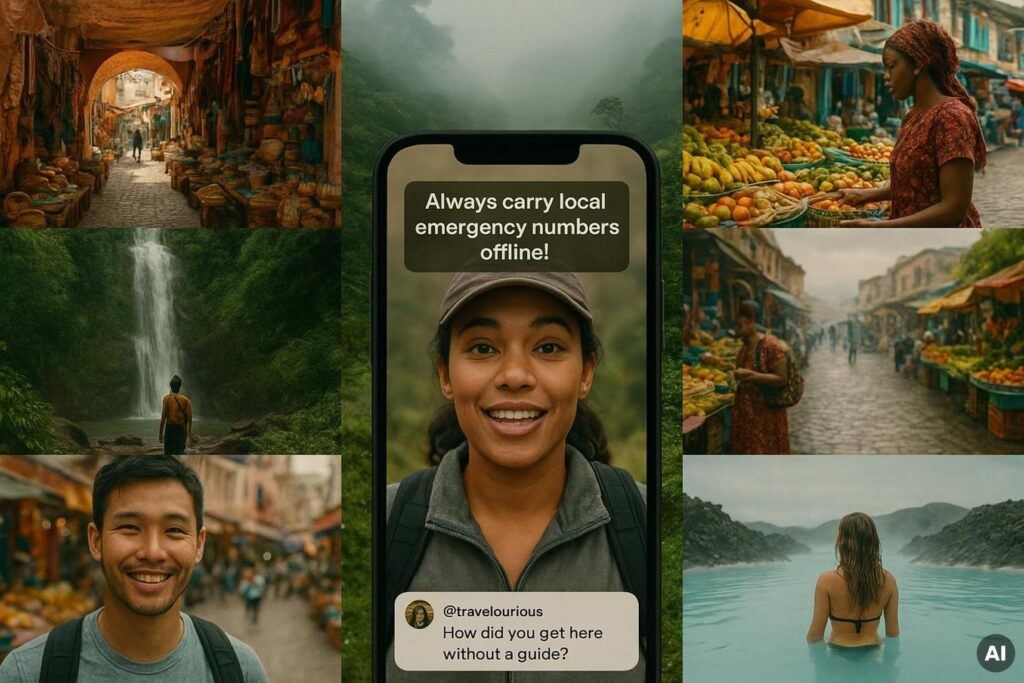
Influencer marketing will still work, but the focus will shift even more to real trust and community. The time of chasing big celebrity accounts with weak engagement is fading. Instead, travel brands will choose micro- and nano-influencers (often under 50,000 followers) because they usually have stronger engagement and closer relationships with their audience.
These creators are useful for niche groups and destination-focused, experience-led content. Many people treat their tips like advice from a friend. Campaigns like Travelocity’s #IWannaGo contest-where over 25,000 nano and micro-influencers promoted the brand-show what can happen when you work with active communities. Success metrics will move away from reach alone and focus more on engagement quality, conversions, and long-term brand trust.
Blending Organic and Paid Content for Audience Engagement
By 2027, the strongest tourism strategies will combine organic and paid content, since each works better with the other. Brands will avoid separate plans and instead build one system where content is boosted across channels for better reach and response. They may create organic destination guides, virtual experiences, and interactive stories, then use paid social, paid search, and native ads to reach high-intent audiences at the right time.
First-party data will play a big role here, helping brands retarget people who already engaged with content. With more relevant ads that match the organic message, brands can drive more bookings. This approach improves visibility and creates a smoother customer journey from inspiration to booking and beyond.
Which Sustainability Trends Will Shape Travel Marketing?
Sustainability is now a main part of travel marketing. By 2027, it will shape traveler choices and brand strategy in a direct way. Travel companies will face more pressure to act responsibly and to explain their impact clearly.
Marketing Responsible and Climate-Smart Travel Experiences
By 2027, promoting responsible and climate-smart travel will be required if a brand wants to stay competitive. More travelers are choosing trips based on environmental and social impact, and they want more than surface-level claims. UN Tourism’s Road Map to Sustainable and Resilient Tourism, leading to the International Year in 2027, shows a global push toward greener travel, with strong attention on Europe. The goal is to guide tourism groups into climate-ready practices and support climate-aware travel.
Brands will promote eco-friendly options as key selling points. Examples include carbon-neutral stays, conservation trips, and local dining. This means building clear stories that show real commitment to responsible tourism and support for local communities. Encouraging people to avoid overtourism will also help destinations grow in a healthier way, matching the 61% of U.S. travelers who said they want to travel more sustainably (Booking.com, 2022).

Measuring and Communicating Impact in Tourism Campaigns
Because many people worry about “greenwashing,” travelers in 2027 will expect proof. Brands will need to show real results with data, not broad promises. Impact reports, third-party certifications, and detailed commitments will become standard tools for showing real work.
Climate pressure will hit the industry in several ways:
- More demand for clear sustainability numbers
- More rules and regulations that can reduce margins
- More extreme weather changing when and where people can travel
So, beyond cutting emissions, the industry will need clear and trusted ways to measure sustainability. Marketers will need to turn technical data into simple stories that connect with eco-minded travelers and support a responsible brand image.
What Opportunities and Challenges Will Tourism Marketers Face in 2027?
The road to 2027 includes both exciting opportunities and real challenges. Tourism marketers will need strong planning and fast action to stay competitive.
Opportunities Created by Real-Time Data and Hyper-Targeting
Real-time data and advanced analytics create huge opportunities for very targeted marketing. Brands can move from broad messaging to precise communication, with detailed insight into traveler needs and behavior. This makes it possible to send personal messages at the best time through the best channels. Forecasting tools also support smarter planning for seasons and events, helping brands adjust faster and spend ad budgets more effectively, which can lower costs and increase conversions.
First-party data-collected from bookings, loyalty programs, and app use-will be a major advantage. It reduces reliance on third-party tracking and gives a clearer view of intent, helping with retargeting and personal messages that build loyalty. Brands that can fix old systems and connect these data sources can also improve operations and make the full trip experience better.
Risks from Rapid Tech Change and Data Privacy Regulations
New technology brings challenges, especially in an industry still tied to older systems. Planes take years to build, hotels are hard to rebuild quickly, and many companies rely on legacy tools that slow down change. This makes it harder to adopt and connect fast-moving tech like advanced AI. Also, useful AI depends on strong data collection, clean data, and good system setup, which can take time, money, and skilled people.
At the same time, privacy rules are changing. With stronger privacy concerns and third-party cookies going away, brands need new data plans that follow the rules while still supporting personalization. Staying compliant and keeping data secure and ethical will be an ongoing effort. Getting it wrong can damage trust and bring legal problems.
How to Stay Agile in a Volatile Global Environment?
Staying flexible in a shaky global environment may be the hardest part for tourism marketers. The industry is affected by economic shifts, politics, and climate impacts. To do well, brands need a mindset of constant adjustment, where planning can change quickly when the market changes.
This means building campaigns in short cycles: test, learn, and improve using real-time feedback. It also means balancing focus on high-value groups (like luxury travelers) with chances in the mass market, and adapting to growing markets like India.
Some of those shifts are structural rather than cyclical, and they change who a brand is even communicating with. As Rad Paluszak from NON.agency puts it: “We’re heading toward a world where you optimize sites for AI agents, not just human users.” Planning for that now costs less than reacting to it later.
In 2027, a flexible brand will be one that keeps thinking creatively, takes sustainability seriously, and invests in long-term resilience so it can handle surprises.
Key Takeaways for Tourism Brands Preparing for 2027
As 2027 gets closer, what tourism brands choose now will shape results later. NON.agency supports a forward-looking approach built on innovation, personalization, and responsible action.
Recommended Action Steps from NON.agency’s Experts
To handle the 2027 market, NON.agency recommends these action steps:
- Invest strongly in AI and forecasting tools to support deep personalization and better operations. This includes solid data collection, clean data processes, and the right setup to use it.
- Build strong first-party data plans to reduce dependence on third-party tracking while meeting privacy needs and keeping targeting accurate.
- Focus on short-form social video, especially TikTok and Instagram Reels, as key discovery and influence channels. Keep storytelling visual and real.
- Work with micro- and nano-influencers, choosing active communities over follower size.
- Make sustainability a core part of the brand, with clear proof and measurable impact instead of broad claims.
- Use UGC as a main content source and help travelers become brand advocates.
- Adapt content for new search behavior (voice, visual, and generative AI) to stay visible as search becomes more conversational.
Together, these steps help brands create immersive, shareable experiences that fit modern travelers.
Metrics That Will Matter Most in the Future
Future tourism marketing will still care about conversion and ROI, but measurement will get more detailed. Engagement will matter more, especially for influencer campaigns and interactive formats, since it shows real connection. Brands will watch returns from AI tools and programmatic spend closely, looking for better efficiency in targeted campaigns.
Sustainability metrics and third-party certifications will become more valuable as proof of responsible work and as factors in buying decisions. Customer lifetime value (CLV) will also rise in importance, showing how well personal experiences build loyalty. Brands will track traffic coming from new search types (voice, visual, and AI-driven discovery) to confirm they are keeping up with how people search. For destinations, export value and guest nights will still matter, but more attention will be paid to traveler satisfaction and positive sentiment linked to real experiences and responsible choices.
As we move into 2027 and beyond, tourism marketing will not be about chasing new tools for their own sake. It will be about changing how brands and travelers relate to each other. Technology will support the human side of travel, helping create trips that feel more personal, meaningful, and responsible. The International Year of Sustainable and Resilient Tourism in 2027 is a clear signal that purpose-led travel is now a standard expectation. Brands that combine new innovation with real authenticity and strong environmental responsibility won’t just keep up-they’ll set the pace and build deeper connections with the next wave of travelers.









Leave a comment