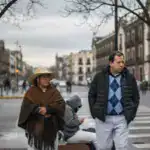

Epstein’s Zorro Ranch and the Shadow of Juarez Femicides: A Disturbing Coincidence?
A chilling chronological overlap has once again cast a shadow over Ciudad Juarez. Federal documents from the United States reveal that notorious financier Jeffrey Epstein acquired his infamous Zorro Ranch in 1993, precisely the same year that the first femicides began to be recorded in the Mexican border city. This stark temporal alignment, coupled with the apparent geographical proximity, has ignited a firestorm of speculation across social media platforms, though, crucially, no official evidence has yet emerged to connect these two deeply disturbing events.
Ciudad Juarez has endured more than three decades marked by horrific violence against women. Since the early 1990s, civil organizations have tirelessly documented the disappearances and murders of young women, many of whom bore signs of extreme violence. According to testimonies cited by Azteca Noticias and data from various collectives, between 2000 and 2025, an estimated 1,500 individuals have gone missing, and over 800 femicides have been recorded in the state of Chihuahua alone. The border region continues to rank among the highest nationally for crimes such as domestic violence, sexual assault, and gender-based killings. For hundreds of families, these figures are not mere statistics, but rather agonizing, unresolved stories.
The “Epstein Files” and the Zorro Ranch
The issue gained renewed prominence following the release of the so-called “Epstein files” – a vast collection of millions of documents, images, and records compiled by the FBI concerning Jeffrey Epstein’s criminal activities, particularly his alleged role in orchestrating a child sex trafficking network in the United States. Among the information brought to light was the 1993 purchase of Zorro Ranch, a sprawling property located near Stanley, in Santa Fe County, New Mexico.
The geographical proximity between the ranch and Ciudad Juarez is notable: approximately 381 kilometers (237 miles) as the crow flies, and between 520 and 528 kilometers (323-328 miles) by road, translating to a five to six-hour drive. This temporal coincidence with the documented onset of femicides in Juarez has inevitably led to comparisons and discussions across digital platforms. However, it is imperative to note that there are currently no judicial investigations, official documents, or verifiable testimonies that substantiate a direct connection between the ranch and the heinous crimes committed in Mexico.
“FBI received a specific tip in 2009 about Jeffrey Epstein’s New Mexico border ranch (Zorro Ranch) being used to route trafficked children to the East Coast.” – Tweet from @ScaryEurope, February 4, 2026. This tip, while unverified in relation to the Juarez femicides, adds another layer of concern regarding the ranch’s alleged activities.
Voices Demanding Justice Persist
While theories proliferate online, the families of the victims continue to grapple with a profound lack of concrete results. José Luis Castillo Carreón tirelessly searches for his daughter, Esmeralda Castillo Rincón, who disappeared on May 19, 2009. Her case is one of hundreds that remain unsolved. In 2018, during a visit to Ciudad Juarez, then-President Andrés Manuel López Obrador pledged justice to the mothers and fathers searching for their loved ones. Years later, many feel that progress has been insufficient and that impunity continues to reign.
Consuelo López continues her agonizing search for her daughter, Griselda Murúa López, who vanished in April 2009. Susan Montes, mother of María Guadalupe Pérez Montes, a femicide victim, has also publicly denounced the lack of results and the re-victimization that families frequently endure. Recently, various collectives have implored the current president, Claudia Sheinbaum, to prioritize gender-based violence in the region and to ensure genuine safety for its inhabitants.
Beyond internet speculation, the documented facts remain stark and undeniable: femicides in Ciudad Juarez began to be recorded in the early 1990s; thousands of cases remain open or without conviction; and families consistently report omissions, negligence, and a pervasive lack of effective protection from authorities.
Unanswered Questions and the Call for Accountability
The unsettling coincidence of Epstein’s Zorro Ranch purchase and the onset of femicides in Ciudad Juarez, while currently lacking a proven direct link, serves as a stark reminder of the enduring mysteries and the desperate need for justice in the region. The sheer volume of unresolved cases, the consistent pleas from victims’ families, and the historical allegations surrounding Epstein’s activities demand continued scrutiny and a relentless pursuit of truth.
The question remains: will the full scope of the Zorro Ranch’s activities ever be truly uncovered, and could its dark secrets hold any answers for the long-suffering families of Ciudad Juarez?