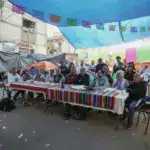

Mexico City, August 27 – Tomorrow, August 28, a diverse coalition of patients, family members, caregivers, specialists, civil society organizations, activists, and citizens will converge in Mexico City for an unprecedented “March for Dignified Death.” The mobilization aims to press for the legal recognition and guarantee of the right to a dignified death within Mexico.
Key Stops and Proposal Deliveries
The march will commence with a stop at the Congress of Mexico City, where participants will deliver a package of federal and local initiatives. Subsequently, the procession will move towards the Zócalo, where they are scheduled to be received at the Citizen Attention Office of the Presidency of the Republic. The demonstration will conclude at the Palacio del Ayuntamiento, where proposals will be submitted to the Government of Mexico City.
These initiatives, initially presented in October 2025, seek to ensure the human right to a dignified death and advocate for the decriminalization and regulation of medical aid in dying. Organizers intend for these proposals to be formally introduced in September.
Evidence of Social Support and Digital Activation
Samara Martínez Montaño, an activist and patient, along with members of the “Dignified Death Now!” Coalition, will deliver a message and present evidence of significant public support for the cause. This evidence includes surveys and official statements.
A national digital activation will accompany the march, allowing individuals outside Mexico City to participate through the hashtags #LeyTrasciende and #MuerteDignaYa.
“Ley Trasciende” and the Debate on Euthanasia
Martínez Montaño, in her document “Euthanasia in Mexico: Dignified Death in Debate,” published in April of this year, emphasizes that discussing euthanasia means addressing “one of the most sensitive, complex, and profoundly human issues of our time: the right to decide how to live, and also how to die.”
She clarifies, “The discussion about euthanasia is not about promoting death. It is, in reality, about recognizing human dignity even at the final moment of life.”
The “Ley Trasciende” (Transcend Law) is a citizen-led initiative, spearheaded by Martínez Montaño, that aims to reform the General Health Law and the Federal Penal Code. This initiative marks a significant step in opening the debate on dignified death in Mexico, a topic that has historically been confined to the private sphere.
Ethical Questions in Modern Medicine
Martínez Montaño highlights that while modern medicine has extended life in ways previously unimaginable, this progress also raises profound ethical questions. “This progress has saved millions of lives, but it has also opened ethical questions that our societies are only beginning to face: what happens when technology can prolong life, but not necessarily well-being? Should the State force someone to continue living under conditions that the person themselves considers incompatible with their dignity?”
She notes that culturally, there has been a tendency to avoid, postpone, or hide discussions about death. However, the advancements in medical technology necessitate a re-evaluation of these perspectives.
Context of Broader Social Issues
The march for dignified death takes place amidst other ongoing social discussions in Mexico. Recent news includes a government emergency radiological exercise, calls for consolidating a National Care System, and reports on various criminal activities, indicating a dynamic social and political landscape.
The organizers of the March for Dignified Death hope that their sustained efforts, backed by public support and comprehensive proposals, will lead to meaningful legislative changes in Mexico regarding the right to a dignified death and medical aid in dying.