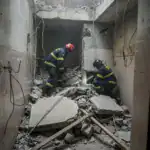
Massive Sinkholes Emerge in Mexico City Following Heavy Rains and Water Leaks
Mexico City, July 3 – Intense rainfall over recent days has led to severe consequences across Mexico City, with two particularly alarming incidents reported in the Iztacalco and Gustavo A. Madero boroughs. Enormous sinkholes have formed, posing significant risks to vehicular traffic and public safety.
Authorities from the Secretariat of Integral Risk Management and Civil Protection (SGIRPC), the Secretariat of Works and Services (Sobse), the Mexico City Water System (Sacmex), and personnel from the affected boroughs have deployed teams to cordon off the areas, assess the damage, and initiate repair work.
These incidents occur amidst a particularly intense rainy season. Experts have warned that the aging drainage networks, leaks, and saturation of the hydraulic system increase the risk of sinkholes, waterlogging, and flooding in various parts of the capital.
Sinkhole on Canal de Tezontle Forces Closure in Iztacalco
One of the most significant incidents took place on Canal de Tezontle in the Iztacalco borough, where a massive sinkhole emerged, necessitating a partial road closure. Specialized teams are currently inspecting the site.
Initial reports suggest the subsidence resulted from soil softening caused by the rains and potential damage to underground infrastructure. As a precautionary measure, Civil Protection personnel, traffic police, and construction workers have erected barriers to prevent vehicle and pedestrian access.
Technical staff are conducting a review to determine the extent of the damage and establish the repair procedure, as such sinkholes can compromise both the asphalt pavement and the drainage and potable water pipes. Authorities have urged motorists to use alternate routes while rehabilitation efforts are underway. The area will remain under surveillance until safety is guaranteed for the public.
Sewage Leak Triggers Mega-Sinkhole in San Juan de Aragón
Another concerning case was reported in the San Juan de Aragón neighborhood of the Gustavo A. Madero borough, where a sewage leak led to the formation of a large mega-sinkhole.
Aerial images reveal the immense scale of the sinkhole and the extensive deployment of heavy machinery and work crews striving to repair the damaged infrastructure. Official reports indicate that the ground collapse is linked to the deterioration of a sanitary collector, which caused soil erosion and subsequent surface collapse.
Specialists note that these types of failures typically develop gradually when continuous filtrations erode the ground beneath the pavement, a phenomenon exacerbated during the rainy season. While repairs continue, traffic in the area remains restricted to prevent accidents and facilitate the replacement of the affected hydraulic infrastructure.
Government Prepares New Actions to Address 2026 Rainy Season
In response to the increasing phenomena associated with rainfall, President Claudia Sheinbaum announced that the Mexican Government would reinforce preventive actions to reduce risks from flooding, river overflows, and damage to urban infrastructure during the 2026 rainy season.
Measures announced include strengthening programs for desilting rivers, dams, and drains, maintaining hydraulic infrastructure, permanent coordination with the National Water Commission (Conagua), the National Civil Protection Coordination, and state governments, as well as constant monitoring of high-risk flood zones.
The strategy also involves accelerating preventive works, maintaining active emergency protocols, and enhancing public communication through timely alerts to mitigate risks from extraordinary rainfall. The president emphasized that prevention would be a key focus for addressing this year’s meteorological phenomena, especially in states historically prone to floods, landslides, and infrastructure damage.
The recent sinkholes in Iztacalco and Gustavo A. Madero underscore the need to strengthen the maintenance of drainage and water networks and to invest in resilient infrastructure in the face of increasingly intense climatic events. Mexico City authorities maintain vigilance at both sites and urge the public to respect road closures, stay informed through official channels, and exercise extreme caution during rainfall.