Mexico City Congress and Civil Society Organizations Discuss General Development Plan
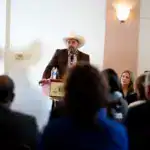
Mexico City, February 26 – Representatives from civil society organizations engaged in a dialogue yesterday with Mexico City deputies and local authorities to present their needs and proposals for the General Development Plan of Mexico City (PGD). This crucial plan is set to guide the city’s development for the next two decades. The discussion took place during the conversatorio titled “Towards a Plan for the Capital: Voices from Civil Society,” held at the Nelson Mandela Hall of the local Congress.
The event highlighted the critical importance of citizen participation in shaping the future of the nation’s capital. Key themes raised by the organizations included the urgent need to promote financial education among youth, implement a comprehensive environmental agenda, strengthen social justice, establish a sustainable and universal care system, develop social violence prevention strategies, ensure access to new technologies, and effectively evaluate public policies.
The conversatorio was led by deputies Martha Ávila Ventura, Xóchitl Bravo Espinosa, Brenda Ruiz Aguilar, Ernesto Villarreal Cantú, Miguel Ángel Macedo Escartín, Víctor Varela López, and Juan Estuardo Rubio Gualito. Pablo Yanes Rizo, Secretary of Planning, Territorial Ordering, and Metropolitan Coordination (Metrópolis), also attended the meeting.
Unprecedented Citizen Participation in PGD Development
During the inauguration, Deputy Martha Ávila emphasized that, in an unprecedented move, the local government is actively seeking input from various sectors to define the city’s vision for the next two decades. She underscored the fundamental role of public co-responsibility in the PGD’s elaboration.
Ernesto Villarreal, from the Workers’ Party, stated that the PGD must prioritize the well-being of individuals, ensure sustained development and territorial equity, and guarantee the right to the city for all residents.
Pablo Yanes, head of Metrópolis, reaffirmed the groundbreaking nature of the PGD’s development process, noting that numerous forums have been held to gather diverse voices and incorporate their proposals into the final document.
Key Panels and Discussions
In Panel 1, “Sustainable and Resilient Capital,” Miguel Ángel Macedo (MORENA party) asserted that societal participation demonstrates that sustainability is not a sectoral agenda but an integral vision where issues of territory, water, housing, and social justice must be addressed transversally.
Deputy Víctor Varela, President of the Commission for Inclusion, Social Welfare, and Enforceability of Social Rights, invited attendees to participate in the consultation for the preliminary opinion on the Care System during Panel 2, “Social Capital of Care and Inclusion.”
During Panel 3, “Competitive Capital with Shared Prosperity,” Deputy Juan Estuardo Rubio Gualito urged citizens to understand the failures of neoliberal governments to create a PGD driven by the state but in collaboration with the populace.
In the final session, “Democratic Capital in Peace and with Good Government,” Deputy Xóchitl Bravo Espinosa highlighted that a PGD consultation of this magnitude had never been conducted before, signaling a strong impetus for direct democracy in the capital regarding a document that will define its future.
Deputy Brenda Ruiz Aguilar echoed the civil society organizations’ emphasis on the importance of citizen participation, especially given the complexity of planning for the capital over the next 20 years.
Participating Organizations
The conversatorio saw participation from various organizations and individuals, including Carlos Flores Vargas, General Director of Corazón Capital; Fernanda Lonardoni, representative for Mexico, Cuba, and Central America for UN-HABITAT; Daniely Miranda, from México por el Clima; Gorka Zubicaray Díaz, from Urban Development of WRI México; Enrique Lomnitz, from Isla Urbana; and Jesús Maffer, Bernardo González, and Enrique Cruz Antonio, from the Popular Urban Movement (MUP).
Other participants included Aldo Gómez, from “¿Cómo vamos?”; Carlos Cabrera, from the Friedrich Ebert Foundation; Emilia Ramírez, from Global Opportunity Youth Network; Jen Mulini, from the Movement of Persons with Disabilities; Carlos Andrés Pérez, from the Simone De Beauvoir Leadership Institute; Cristina Reyes, from México Unido contra la Delincuencia; Eduardo Bohórquez, from Transparencia Mexicana; and Karla Valverde from UNAM.
The collaborative effort between the Mexico City Congress and civil society organizations marks a significant step towards a more inclusive and representative General Development Plan for the capital.