Mexico City Congress Inaugurates “Women’s Parliament 2026” to Advance Gender Equality
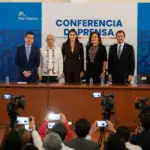
Mexico City, August 10, 2026 – To further the conquest of women’s rights in the capital and provide a space for the exchange of ideas, the Mexico City Congress officially inaugurated the “Women’s Parliament 2026.” The event was led by deputies from the Gender Equality Commission of the Congress and the heads of three key capital government agencies.
During her address at the Donceles Legislative Precinct, Congresswoman Cecilia Vadillo Obregón not only highlighted the work of the Mexico City Government in favor of women but also emphasized that this Parliament will serve as a crucial platform to gather their proposals for enhancing their quality of life.
“We are gathered here today, women from all over the city, women of all ages, women with different struggles, different experiences, but all with an extraordinary voice and a drive that compels us to be here and to continue fighting for our rights,” she asserted.
As President of the Gender Equality Commission, Vadillo Obregón stated that women’s causes will always unite them beyond political affiliations, and that collectively, they can strengthen their fight against patriarchy and for greater rights. She strongly condemned attempts by the far-right to revoke these rights, such as withdrawing women’s voting privileges.
“It angers me greatly to say that this has not changed, that unfortunately, we have an absurd discussion about whether women’s right to vote should be withdrawn. This is a discussion that has no place in this city, in this country, or in this world, because it signifies a total regression to the struggles of our grandmothers, the struggles of our mothers, and the struggle we wage today,” she underscored.
Legislators Emphasize the Importance of Women’s Proposals
Separately, legislators Miriam Valeria Cruz Flores and Valentina Valia Batres Guadarrama concurred that the proposals presented by the parliamentarians will be taken into account for the construction of legislative instruments. They noted that while significant rights have been achieved, there is still much more to be done for women.
Deputies Juana María Juárez López and Leonor Gómez Otegui highlighted that the capital’s Congress has approved initiatives aimed at reducing various forms of violence against women, emphasizing that this must be an ongoing effort to prevent the normalization of such issues.
Key Officials and Activists Participate in the Inauguration
The event also saw the participation of the heads of the capital’s Secretariat for Women, Daptnhe Cuevas Ortiz; the Secretariat of Public Health, Nadine Flora Gasman Zylbermann; and the Secretariat of Welfare and Social Equality, Pablo Enrique Yanes Rizo, alongside councilwomen and activists from organizations advocating for women’s rights.
In their respective turns, Cuevas Ortiz and Gasman Zylbermann underscored the importance of female political participation in identifying the challenges they face, developing solutions, and guiding public policy. Yanes Rizo affirmed that the creation of the Care System Law was a direct result of the struggles of social and feminist movements, which have consistently sought to eliminate inequalities stemming from the sexual division of labor.
Parliamentary Process and Key Legislative Themes
Following the inauguration of the “Women’s Parliament 2026,” the Dean’s Table was established, comprising deputies from the Gender Equality Commission, who then administered the oath to the parliamentarians. Subsequently, the parliamentarians elected their own Board of Directors and proceeded to present their initiatives.
Derived from an Agreement approved by the Commission, the proposed legislative initiatives are expected to revolve around crucial themes, including access to housing and a life free from violence; the right to sexual and reproductive health; security and justice with a gender perspective; care; economic autonomy; political participation; mobility; education; culture; and the environment, among others.
This initiative marks a significant step towards empowering women in Mexico City and ensuring their voices are heard in the legislative process, aiming to create a more equitable and just society for all.