
Mexico City, September 29 – The Mexico City Congress yesterday presented the Metropolitan Area Development Plan (POZMVM), a comprehensive initiative designed to foster a shared vision and enhance coordination among Mexico City, the State of Mexico, Hidalgo, and Morelos. The plan seeks to address common challenges such as water scarcity, mobility issues, and housing shortages, ultimately benefiting the 23 million residents of the region.
Plan Unveiling and Public Consultation
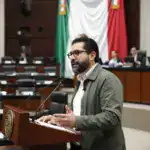
The presentation was led by Deputy Alberto Vanegas Arenas, President of the Metropolitan Development Commission of the local Congress, and Enrique Irazoque Palazuelos, Head of the Secretariat of Planning, Territorial Planning, and Metropolitan Coordination (METRÓPOLIS). They also announced a public consultation process to gather feedback and shape the future of the metropolitan area.
During the press conference at the Donceles Legislative Precinct, legislators Xóchitl Bravo Espinosa, President of the Political Coordination Board (JUCOPO), and Ángel Augusto Tamariz Sánchez were also present.
Addressing Shared Challenges
Deputy Alberto Vanegas emphasized the critical need for a tool to solve common problems that transcend administrative boundaries. He highlighted issues such as water management, mobility, pollution, urban growth, housing, waste management, and risk prevention, stating that these cannot be resolved in isolation.
“Mexico City does not end when we cross a borough, a municipality, or even a federal entity. Millions of people live, work, study, and move within the same metropolis, and the great challenges we face also do not recognize administrative borders,” Vanegas stated.
Scope and Objectives of the POZMVM
The Mexico City Metropolitan Area (ZMVM) comprises 84 municipalities and boroughs, home to nearly 23 million inhabitants. The POZMVM aims to guide long-term planning, enabling different levels of government to coordinate policies and projects in areas like mobility, transportation, environment, infrastructure, and territorial development.
Vanegas clarified that the POZMVM is not a map that changes zoning property by property, nor does it replace local urban development programs. It does not create new laws or establish specific budgets for local works. “In the particular case of Mexico City, the project does not in itself modify the land use of properties, grant construction permits, or determine how much a person must pay in property tax. Specific decisions in these matters continue to be subject to the attributions, norms, and instruments of our city,” he explained.
Public Participation and Transparency
Vanegas proposed that the discussion of the POZMVM be conducted with clear information and citizen participation to enrich the process. “What we have today is a project under public consultation. From September 24 to November 22, anyone can review it and submit comments, observations, and proposals.”
Deputy Xóchitl Bravo echoed that the POZMVM does not imply new taxes and will not affect the private property of the capital’s population. She underscored the importance of listening to citizens during its development. The MORENA Parliamentary Group Coordinator announced that a Point of Agreement would be presented to involve all political forces in this consultation. She also mentioned that ballot boxes would be placed in the capital’s Congress and Legislative Modules to gather citizens’ concerns.
Morenista Ángel Tamariz stressed the importance of adequately informing the public to prevent misinformation and ensure people understand that the POZMVM will establish public policies to improve their quality of life.
Urgent Need for Update
Enrique Irazoque, Head of METRÓPOLIS, highlighted that the Metropolitan Area is home to nearly 23 million people, representing 17 percent of the country’s population and generating 28 percent of the national GDP, which entails significant challenges and responsibilities.
Irazoque emphasized that the current program dates back to 1998 and corresponds to a ZMVM that no longer exists, making it urgent to update it and implement a new metropolitan planning program aligned with the current configuration. He detailed that the objectives of this new program include understanding territorial needs, achieving legislative harmonization among federal entities, and generating projects to guarantee family rights, among others.