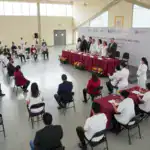

Mexico City, September 25, 2026 – The Mexico City Attorney General’s Office (FGJ-CDMX), through its Institute of Professional Training and Higher Studies (IFPES), in collaboration with the French Embassy in Mexico, has significantly strengthened its forensic investigation capabilities. This was achieved through a specialized 30-hour training course titled “Crime Scene Management,” which concluded on September 25, 2026.
International Collaboration Enhances Forensic Expertise
The course saw the participation of 24 public servants from the Investigative Police (PDI) and Forensic Services. Specialists from the French National Scientific Police Service (SNPS) shared their expertise and best practices in various forensic disciplines, including forensic chemistry, latent fingerprint identification, ballistics, and the processing of complex crime scenes.
Jorge Gómez Carreño, head of IFPES, highlighted the importance of this initiative, emphasizing the commitment of Attorney General Bertha Alcalde Luján to continuous training and professionalization of FGJ-CDMX personnel. “This course represents a valuable opportunity that allows us to strengthen cooperation with France and bring experiences, methodologies, and good practices developed in the field of scientific and forensic police. We particularly thank the French Embassy for making this exchange possible,” stated Gómez Carreño.
Comprehensive Training and Practical Application
The academic activity, conducted in person, spanned five days, from September 21 to 25. The curriculum covered critical aspects of crime scene management, including the preservation and initial organization of the intervention site, as well as the search, fixation, collection, and packaging of evidence. The primary goal was to enhance coordination between the PDI and Forensic Services during crime scene processing.
The training combined theoretical content with practical exercises conducted at the IFPES Tactical House and other simulated scenarios. PDI and Forensic Services personnel jointly applied the procedures learned, including the use of Bluestar reagent to detect potential bloodstains. These practical sessions were crucial for reinforcing common criteria for action and applying procedures that contribute to preserving the authenticity, integrity, and traceability of evidence throughout the chain of custody.
Mutual Benefits for Both Nations
Pierre Sourbes, Deputy Internal Security Attaché at the French Embassy, underscored the value of this collaboration with the FGJ-CDMX. He noted that “the exchange of experiences between French specialists and Mexican police and forensic personnel contributes to the professional strengthening of both institutions.” Sourbes further emphasized that French specialists traveled to Mexico specifically to share investigation methodologies, and these types of encounters foster learning and exchange spaces between police and specialists from both countries.
This international partnership marks a significant step forward in enhancing the technical, scientific, and methodological capacities of Mexico City’s justice system, ultimately contributing to more effective crime investigation and resolution.