Mexico City Announces Measures to Reorder Historic Center Street Vendors
Mexico City, January 23 – The Government of Mexico City has initiated a comprehensive plan to recover public spaces in the Historic Center, addressing the proliferation of informal street vending. The initiative, announced on January 17, 2026, by Head of Government Clara Brugada, marks a new phase in efforts to reorder the city’s most emblematic area.
Clara Brugada emphasized that combating informal street vending is a central pillar of the Public Space Reordering Plan. She warned that vendors who do not adhere to the established agreements will be immediately removed, according to an official statement from the capital’s government.
Ending the Sale of Illegal Merchandise
Brugada detailed that the program includes a substantial reduction in street commerce, encompassing the removal of so-called “toreros” (vendors without fixed stalls) and nearly four thousand established vendors operating in unauthorized areas.
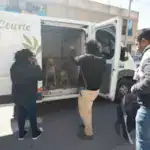
A recent operation resulted in the seizure of 50,700 vapes and electronic cigarettes. The Head of Government characterized this action as a clear message to maintain the Historic Center free of illegal merchandise. She highlighted that informal commerce and the sale of illicit products are recurring issues in various parts of the first square of the city. “We know that illegality occurs in different areas, in different ways, and unfortunately, in certain parts of our Historic Center,” Brugada stated.
The city government is coordinating actions with various departments, including the Undersecretariat of Reordering and the Secretariat of Citizen Security, to prevent the return of illegal merchandise and to reinforce surveillance regarding permits and the occupation of public space.
Eight Axes to Transform the Historic Center
The Master Plan for the Reordering of the Historic Center of Mexico City is structured around eight fundamental axes, designed to improve one of the most significant areas of the city and the country. According to Clara Brugada, these axes are:
- Habitability, repopulation, and housing
- Mobility, infrastructure, and public space
- Risk management
- Economy and environment
- Historical and cultural heritage
- Culture and tourism
- Security
- Governance
Since 2025, the Undersecretariat of Reordering has confiscated 15 tons of metal structures and removed more than 24,572 objects and merchandise. Additionally, over 3,200 referrals have been made to the civic judge for obstruction of public thoroughfares, and 211 individuals have been presented to the Public Ministry within the perimeter of the Historic Center, according to official figures. So far in 2026, the government reports the removal of 390 additional stalls that lacked authorization to sell in the area.
Conditions and Consequences for Street Vendors
César Cravioto Romero, the Secretary of Government, directly appealed to vendors to comply with agreements reached with their leaders. “We are going to remove those who set up in places where agreements stipulate that there cannot be public street commerce,” Cravioto Romero asserted, making it clear that there will be consequences for those who break the rules.
The official also urged vendors to refrain from selling prohibited products, such as vapes and electronic cigarettes, emphasizing that the sale of illegal merchandise will not be tolerated in the Historic Center.