
Mexico City, July 21, 2026 – Mexico City’s Head of Government, Clara Brugada Molina, announced today her intention to send a constitutional reform initiative to the Mexico City Congress. The proposal seeks to recognize emotional well-being as a universal human right and to establish an obligation for the capital’s government to implement a comprehensive public policy on mental health.
A Response to International Recommendations and Urgent Needs
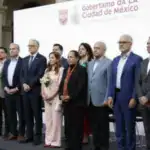
The announcement was made during the “Vida Plena, Corazón Contento. Cierre de Ciclo Escolar 2025-2026” event. Brugada Molina stated that this initiative directly responds to the experiences gained from the “Vida Plena, Corazón Contento” program and constitutionalizes international recommendations from UNICEF and the WHO, aiming to bring mental health services closer to schools.
Speaking from the facilities of the Institute of Higher Secondary Education (IEMS) Coyoacán, the capital’s leader also proposed a new specific right for young people: access to public and free emotional well-being services, including prevention, accompaniment, listening, guidance, and psychological care in schools.
“We will also send a legislative proposal to create the Emotional Well-being System. This system must create spaces for inter-institutional coordination; a territorial care network; community prevention mechanisms, and strategies for emotional emergency care,” Brugada Molina explained, emphasizing that this will mark a before and after in human rights in the city.
The Head of Government highlighted the urgent need for this initiative, citing that, according to the World Health Organization, suicide is the third leading cause of death among people aged 15 to 29. In Mexico City, two out of three adolescents between 12 and 17 years old experience some degree of emotional distress, with 50 percent of youth consultations being for anxiety or depression.
“Vida Plena, Corazón Contento” Program: A Proven Success
Presenting the balance of the “Vida Plena, Corazón Contento” program, Brugada Molina noted that during the current school year, 200 mental health specialists attended 1,111 schools, conducting over 22,000 activities benefiting more than one million people. This included 908,000 students, 83,000 parents and guardians, and over 24,000 teachers.
Additionally, nearly 13,000 individual accompaniment sessions were provided, and 147 cases of suicidal risk were identified and addressed in a timely manner. Brugada Molina underscored that “arriving on time can save lives and prevent emotional suffering from becoming irreversible.”
The strategy, she emphasized, shifted the traditional model of care by bringing mental health services directly to schools. “We don’t wait for young people to seek these services; now psychologists go to where they are,” she stated.
Brugada Molina also recalled the struggle that led to the creation of the first high school in Mexico City, later the IEMS, whose history began under the slogan “Prepa Sí, Cárcel No” (High School Yes, Prison No) by the population to prevent the establishment of another prison in Iztapalapa.
Collaborative Efforts and Future Plans
Nadine Gasman Zylbermann, Secretary of Public Health of Mexico City, acknowledged the continuous work of the 200 mental health specialists who are present in schools every 15 days, primarily attending to students. These actions also target teachers, tutors, and parents, with the aim of addressing important issues such as anxiety and depression, peer violence, psychoactive substance use, and suicide prevention. They offer spaces free of judgment, stigma, and discrimination, which can make a significant difference.
Gasman Zylbermann highlighted that a crucial aspect of the program is fostering a culture of peace for students, teachers, and families, strengthening tools to resolve conflicts peacefully and build egalitarian and respectful school communities. She also mentioned the importance of the social emergency protocol for suicidal risk, which timely identifies individuals needing attention and channels them immediately to specialized services.
Amaya Ordorika Imaz, head of the Institute for Mental Health and Addiction Care (IASAMA) – formerly IAPA – recognized the work of the 200 mental health specialists, those coordinating the strategy, and the 1,111 schools and their communities that opened their doors during the school year. She also praised the vision of the local executive for implementing such programs that “daily drive the mental health of our children, adolescents, and youth to be a priority of this government.”
Jorge Santos Valencia, General Director of IEMS Mexico City, emphasized that the institution promotes a humanist educational model focused on listening, care, and the comprehensive development of students. He noted that since 2019, IEMS has had a psychological care program for students and works in coordination with IASAMA, considering that mental health should be addressed as a collective responsibility from the public sphere.
He reported that IEMS consists of 28 campuses distributed across 15 boroughs, serving 28,000 students, and has graduated approximately 45,000 students over its 26 years of existence.
Student Fernanda Mendoza Aguilar highlighted the fundamental role of mental health in well-being and shared her experience living with Attention Deficit Hyperactivity Disorder (ADHD) and anxiety, aiming to raise awareness about the importance of seeking help and building empathetic and supportive environments. She praised the “Vida Plena, Corazón Contento” strategy, stressing that it provides comprehensive, free, and stigma-free care to students, families, and educational staff.
At the conclusion of the event, the Head of Government signed a decree to modify the name and attributions of the public body known as IAPA, which became the Institute for Mental Health and Addiction Care (IASAMA).
Source: 889noticias.mx